Bay County Court serves as a central part of the Florida court system, handling a wide range of legal matters for residents, businesses, and visitors. From civil and criminal cases to probate and traffic matters, the court supports many legal proceedings through its judges, clerk office, and courthouse departments. If you need court services, case information, legal documents, or access to public records, knowing how Bay County Courts operate can help you find the right information with less effort.
This page gives a clear overview of Bay County Court Florida, helping you learn about court records, case search options, courthouse services, clerk office responsibilities, court divisions, and public access to legal information. You will find direct paths to detailed sections covering each topic, making it easier to locate the service or resource you need before visiting the courthouse or using available online court services.
How to Search Bay County Court Cases Online
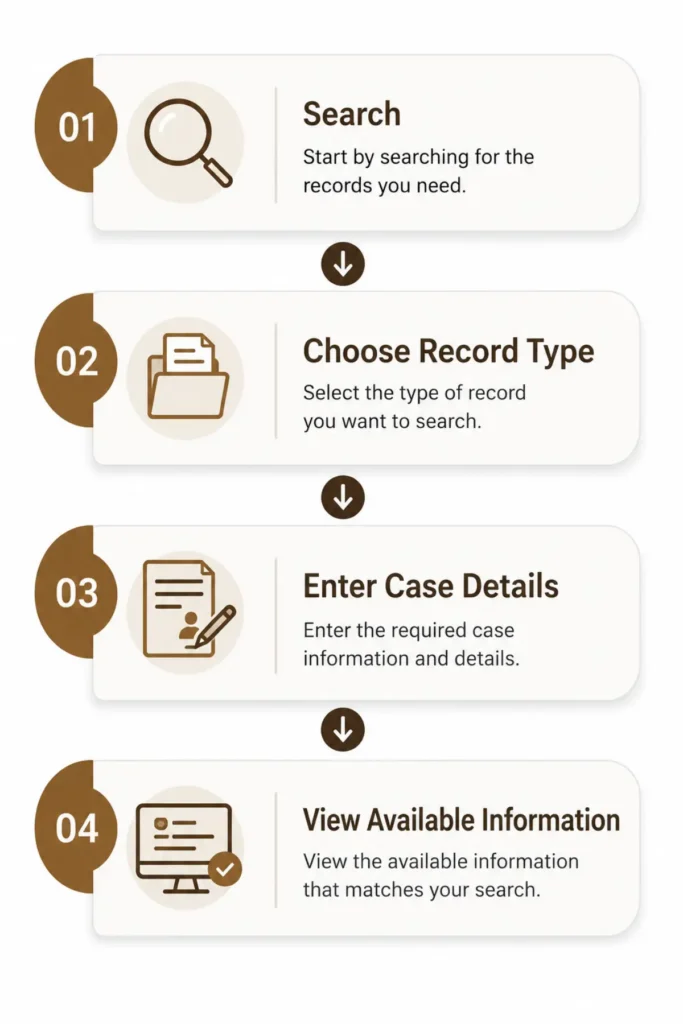
Searching for court case information in Bay County becomes easier when you know what details to use. The Bay County Court Case Search system allows users to locate civil, criminal, family, probate, and traffic cases through different search methods. Each method serves a different purpose depending on the information available.
Access Official Court Case Records
For official and verified court case information, users should rely on the Bay County Clerk of Court system.
Official access is available here: https://www.baycoclerk.com
This source provides accurate case data, updated records, and public access to court files. Users can search civil, criminal, traffic, and probate cases directly through the official portal.
Search by Name
The most common method is a name-based search. The Bay County Court Case Search system allows users to enter a person’s name to find related court records. This method works well when the case number is not available. Users can search using:
- Plaintiff name
- Defendant name
- Party search
- Name lookup
Enter the full legal name for better results. Partial names may show multiple records, so results may require filtering. Name-based search often returns multiple cases linked to one person. These may include civil disputes, criminal charges, or family matters. Reviewing each record helps identify the correct case.
Search by Case Number
A case number search provides the fastest access to court records. Every case filed in Bay County receives a unique case identifier. Users can search using:
- Case lookup
- Docket number
- Court file number
This method delivers precise results because each number matches a single case file.
After entering the case number, users can view full case details such as filing information, case type, and current status. This option works best for attorneys, researchers, or users who already have case documents.
Search by Citation Number
Citation search is mainly used for traffic-related cases. Each citation or ticket includes a unique reference number assigned at the time of issuance.
Search options include:
- Citation lookup
- Traffic ticket search
- Citation search
This method helps users track traffic violations, fines, and hearing details. It is commonly used for speeding tickets, parking violations, and minor infractions. Entering the citation number directly takes users to the exact record linked to the ticket.
Filter and Refine Search Results
After running a search, filtering options help narrow results. This step becomes useful when multiple records appear. Users can refine results using:
- Filing date
- Hearing date
- Judge name
- Division type
- Case status
Filters help separate active cases from closed ones. They also help identify updates such as new hearings or case movements. For example, selecting a specific filing date range can reduce unrelated results. Choosing a division like civil or criminal helps focus on relevant c
Jurisdiction and Responsibilities
Every court has a defined court jurisdiction, which explains the types of cases it may hear. The Bay County Court has legal authority over many local matters that fall within county-level limits established by Florida statutes. Its judicial responsibilities include hearing misdemeanor criminal cases, civil disputes within the county court’s monetary limit, landlord and tenant matters, traffic offenses, and small claims actions. The court may issue orders, conduct hearings, review evidence, and enter final judgments based on applicable law.
Many county cases begin with filing legal documents through the Clerk of Court. Once a case is filed, the court schedules hearings, reviews motions, and oversees the legal process until the matter reaches a resolution. This organized process helps parties understand each step from filing through the final court decision.
Role of Court in the Florida Judicial System
The Bay County Court is one part of the broader Florida courts system. Florida’s judicial structure includes county courts, circuit courts, district courts of appeal, and the Florida Supreme Court, with each court serving a different purpose. The county judiciary focuses on local legal matters, while the circuit court handles cases that involve broader legal authority, such as felony criminal offenses, major civil disputes, family law matters, probate proceedings, and juvenile cases. If a legal issue falls outside county court jurisdiction, it is handled by the appropriate court within the state judicial system.
By working together, these courts help provide fair access to justice, consistent legal procedures, and an organized process for resolving disputes. This structure allows residents and visitors to locate the correct court service based on the type of case they need to address.
Brief On Court Case Results
Court case results contain detailed legal information. Each record includes structured data that explains the progress of a case. Common elements include:
- Docket entries
- Hearings
- Court orders
- Filings
- Judgments
- Case history
Docket entries show every action taken in a case. Hearings display scheduled court appearances. Court orders show decisions made by a judge. Filings include documents submitted by parties involved. Judgments represent final decisions or rulings. Reviewing case history helps users track how a case progressed over time. This includes updates, motions, and final outcomes.
Clerk of Court Services
The Clerk Office plays a central role in the Bay County court system by supporting daily court administration and maintaining official records. It serves as the primary location for filing legal documents, requesting court records, paying certain court-related fees, and accessing public services. Many people rely on the office for information about court procedures before attending a hearing or submitting paperwork.
The office works closely with judges, court staff, attorneys, and the public to keep court operations organized. Many services are available online, allowing users to review records, complete forms, or begin document requests before visiting the courthouse.
Responsibilities of the Clerk Office
The Clerk Office is responsible for many court administration tasks that help the judicial system operate efficiently. Staff members receive court filings, maintain official records, process legal documents, record case activity, and prepare files for court proceedings. They also collect certain payments and help manage records that are available for public access under Florida law.
The office supports both court professionals and members of the public by answering questions about filing procedures, available services, and document requests. It acts as the official custodian of many court records and works to keep those records accurate, organized, and available according to legal requirements.
Filing Court Documents
Many legal matters begin with a court filing, whether it involves a civil dispute, probate matter, family case, or another court action. Documents may include petitions, complaints, motions, responses, affidavits, or other required legal forms. Many filers now use e-filing, which allows documents to be submitted electronically instead of delivering paper copies.
Before submitting documents, review the filing instructions, complete every required legal form, and confirm whether filing fees apply to your case. Once accepted, the filing becomes part of the official court record and is assigned to the appropriate case file for future hearings and court activity.
Requesting Certified Copies
Many people request certified copies of court documents for legal, financial, business, or personal purposes. A certified copy includes an official certification showing that it matches the record maintained by the Clerk Office. Common requests include court orders, judgments, probate documents, marriage records, and other official records.
To submit document requests, you may need to provide case details, party names, or other identifying information. Some requests require identity verification and payment of copy fees before processing begins. Processing times depend on the type of document requested and the office’s workload.
Additional Public Services
The Clerk Office provides several public services beyond court administration. Many visitors use the office to apply for marriage licenses, record official documents, request public records, or complete recording services for deeds, mortgages, liens, and similar documents that become part of the county’s official record system.
Many offices also provide passport services, allowing eligible applicants to submit passport applications and supporting documents in one location. Before visiting, gather the required identification, review any necessary paperwork, and confirm whether appointments or extra documentation are required for the service you need.
Bay County Court Records
Bay County Court Records provide access to documents created during court proceedings in Bay County, Florida. These records help people review case details, confirm court actions, research legal matters, or obtain certified copies for personal or legal use. The type of information available depends on the case and whether the record is open for public access under Florida law.
Court records are organized by case type and filing date. Many records can be located through online search tools, while others require a records request through the appropriate court office. Before requesting a document, it helps to know the case number, the names of the parties involved, or the approximate filing date. This information can make the search faster and reduce delays.
Types of Court Records
Bay County Court Records include several categories based on the nature of the case. Each category serves a different purpose and contains unique court documents.
Civil records
Civil records cover disputes involving contracts, property ownership, small claims, landlord-tenant matters, debt collection, and other non-criminal cases. These files often include complaints, motions, court orders, judgments, settlement agreements, and supporting documents filed during the case. Civil records can help parties review case progress, verify court decisions, or obtain certified copies for legal or personal use. Depending on the case, they may contain hearing dates, filing history, and information about the final outcome.
Criminal records
Relate to misdemeanor and felony cases handled by the court. Depending on public access rules, these records may include charging documents, arrest-related filings, hearing schedules, plea agreements, sentencing records, probation orders, and final judgments. Many criminal case files include a docket that tracks each action taken throughout the case, allowing users to review important events from the initial filing through the court’s final decision.
Probate records
Probate records involve estates, wills, guardianships, conservatorships, and related court proceedings. These records document the administration of an estate, appointment of personal representatives, distribution of assets, and other probate matters handled by the court. Probate files may contain petitions, inventories, notices, court orders, and final estate settlements. They are often requested by family members, beneficiaries, attorneys, or others with a legal interest in the estate.
Family records
Family records include matters such as divorce, child custody, child support, adoption, paternity, and domestic-related court proceedings. These records may contain petitions, parenting plans, support orders, custody determinations, and final judgments. Some family case documents are available to the public, though certain records are restricted by law to protect sensitive personal information, children, or confidential court filings.
Traffic records
Traffic records contain information about traffic citations, court hearings, license-related matters, and case outcomes involving traffic violations. These records may include citation details, payment status, scheduled hearings, court decisions, and any fines or penalties ordered by the court. People often review traffic records to verify the status of a citation, confirm payment history, or obtain documentation for insurance, employment, or legal purposes.
Public and Confidential Records
Many Bay County Court Records are available through public access, allowing members of the public to review court information that is not restricted by law. Open records support transparency and help people verify case activity. At the same time, some court files contain sensitive information. Confidential records are protected from public viewing to safeguard privacy or comply with state law. Common examples include records involving minors, certain family matters, and protected personal information.
Some cases may contain sealed records, which are removed from public access through a court order. Other documents may qualify as exempt records, meaning they cannot be released under specific legal exemptions. Before requesting a file, it is helpful to confirm whether the record is available for public inspection.
Record Retention and Maintenance
Court records are maintained according to Florida record retention requirements. Each case file becomes part of the court’s official record and may include pleadings, court files, evidence logs, hearing schedules, docket entries, filings, court orders, and final judgments.
The court preserves these documents for the period required by law. Older records may be stored in archived systems, which can affect retrieval time. Digital records are often available for many recent cases, though some historical files may require manual processing before they can be reviewed or copied. Accurate record maintenance helps preserve the integrity of court proceedings and provides a reliable history of each case from filing through final disposition.
Requesting Court Records
If you need copies of Bay County Court Records, you can submit a records request using the information available through the appropriate court office. Providing the case number, party name, or filing date can improve search accuracy and reduce processing time. Standard document copies may involve copy fees, with separate charges for certified documents when an official court certification is required. Certified copies are often requested for legal filings, financial matters, or government agencies that require verified court records.
Some requests can be completed online, while archived files may require extra time for record retrieval. If you are unsure which record you need, reviewing the case information before submitting a request can help identify the correct document and avoid unnecessary delays.
Court Hearings, Judges and Courtroom Procedures
Bay County Court handles different types of hearings that help resolve civil, criminal, family, and probate matters. Each hearing follows a structured process where parties present their case before a judge. Most hearings follow a set schedule, and users can check hearing dates through the court docket or case search tools. Court hearings play a key role in moving a case forward. They may include initial hearings, motion hearings, pre-trial conferences, and final trials. Each hearing has a specific purpose, and parties must attend on the assigned date. Missing a hearing can affect case progress or lead to legal consequences.
Court Hearings
Court hearings in Bay County Court allow both sides of a case to present arguments before the court. These hearings follow a hearing schedule set by the court system.
Common types of hearings include:
- Initial appearance hearings
- Pre-trial hearings
- Motion hearings
- Trial hearings
Each hearing takes place in a courtroom assigned by the court clerk. Court appearance rules require parties to arrive on time and follow courtroom instructions. Hearing notices usually contain details such as date, time, and courtroom assignment. The hearing schedule may change if the judge reschedules or if legal motions are filed. Checking the latest court docket helps users stay updated on hearing dates.
Judges and Their Responsibilities
Judges in Bay County Court manage courtroom activity and make decisions based on law and presented evidence. They review case files, listen to both parties, and issue rulings. Judicial decisions depend on facts, legal arguments, and applicable Florida law. Judges also handle case assignment, where they receive and distribute cases within their court division.
Courtroom management is another key responsibility. Judges maintain order, control proceedings, and make sure both parties follow court rules. They may also approve motions, set hearing dates, and guide the trial process. Each judge focuses on fairness, consistency, and legal accuracy when reviewing cases.
Courtroom Procedures
Courtroom procedures in Bay County Court follow a structured process that supports fair legal proceedings. Each case moves through defined stages, including opening statements, evidence presentation, witness testimony, and closing arguments. Courtroom etiquette plays an important role during hearings. Visitors and participants must remain respectful, avoid interruptions, and follow instructions from court staff. Legal proceedings rely on evidence submitted by both sides. Judges review documents, witness statements, and other materials before making a decision.
Trials may include cross-examination, where each side questions the other party’s witnesses. This process helps the court evaluate facts clearly and reach a fair outcome. Courtroom assignment is managed by the clerk’s office, which allocates cases and schedules hearings in appropriate courtrooms. Court hearings, judges, and courtroom procedures work together to keep Bay County Court operations organized and fair. Each stage of the process helps ensure that cases move forward properly and decisions are based on law and verified evidence.
Court Fees and Payments
Bay County Court fees cover filing fees, fines, and court costs tied to different case types. Each case may carry its own payment structure based on service type and legal requirement. Filing fees apply when a case starts. Court costs may apply during hearings or document processing. Fines often relate to traffic or criminal matters. People often search for clear steps to complete payments without delays. The court system provides several payment options that support both in-person and online transactions. Online access has made fee handling faster and more accessible for many users.
Online Court Services
Online court services support users who want quick access to court-related tasks without visiting the courthouse. These services help reduce wait time and allow users to manage filings, payments, and records from a digital platform. Most services are available any time, which supports users with urgent needs or busy schedules.
Electronic Filing
Electronic filing allows users to submit court documents through a secure system. This method removes the need for physical paperwork and speeds up case processing. Attorneys, legal representatives, and self-represented users often rely on this option for submitting case documents. E-filing supports multiple case types, including civil, criminal, and family matters. Users can upload documents, track submission status, and receive confirmation once the filing is accepted. This process reduces manual errors and helps maintain organized case records.
Online Payments
Online payment services allow users to pay citations, fines, and court fees through a secure portal. This option works for traffic tickets, court costs, and other financial obligations linked to a case. Users can complete citation payment using debit or credit cards. Fee payment options also support case-related charges. The system processes transactions quickly and provides confirmation receipts for reference. This reduces the need for in-person visits and supports faster case resolution.
Available Court Records & Documents
Digital court records give users access to case documents, filings, and case updates through an online system. These records include electronic files related to civil, criminal, and probate matters. Users can search for case details, view case history, and download available documents. Electronic records help reduce delays linked to physical document requests. Many users rely on digital files for quick verification and case tracking.
Other Online Services
Remote access tools allow users to manage court-related tasks from any location. These services include online resources for case information, document searches, and court updates. Virtual services support users who need access without visiting the courthouse. These tools help with scheduling, document review, and general case information. Online resources continue to improve access to court-related services for both routine and urgent needs.
Contact and Location Information
If you plan to visit the Bay County Courthouse, knowing where to go before your arrival can save time and help you prepare. The courthouse serves as the primary location for many court-related services, including hearings, filings, records requests, and clerk services. Before visiting, confirm your hearing schedule, gather any required documents, and allow extra time for security screening.
Main Bay County Courthouse
The Bay County Courthouse is the central judicial building for many local court functions in Bay County, Florida. Visitors use this location for civil, criminal, family, probate, and traffic matters, depending on the assigned court division. Many administrative services are available through the Clerk of Court, making the courthouse a common destination for case-related tasks. Before leaving home, check the office or courtroom connected to your case. This simple step helps avoid delays and directs you to the correct service desk or courtroom upon arrival.
Physical Address
Bay County Courthouse
300 East 4th Street
Panama City, FL 32401
Mailing Address
P.O. Box 2269
Panama City, FL 32402
Contact Information
For general court-related inquiries, visitors may contact the Bay County Clerk of Court & Comptroller using the information below:
- Main Phone: (850) 763-9061
- Administration Office: (850) 747-5100
- Fax: (850) 747-5188
- General Email: webbaycoclerk@baycoclerk.com
Some departments, such as Civil Court, Family Law, Probate, Traffic, Jury Services, and Official Records, may have dedicated staff or department-specific contact information for specialized assistance.
Court Departments
The courthouse includes several departments that handle different case types. Each division follows its own procedures, filing requirements, and hearing schedules. Common court departments include:
- Civil Division – Handles disputes involving contracts, property, small claims, and other civil matters.
- Criminal Division – Processes misdemeanor and felony cases, court appearances, and related filings.
- Family Division – Manages divorce, child custody, child support, adoption, and domestic relations cases.
- Probate Division – Oversees wills, estates, guardianships, and related proceedings.
- Traffic Division – Handles traffic citations, driving offenses, and scheduled hearings.
Checking the correct department before your visit helps you reach the right office and receive assistance more quickly.
Frequently Asked Questions
Many visitors have similar questions before using Bay County Court services. The answers below explain common court processes, records access, filing procedures, and clerk services in clear language. If you need details about a specific topic, visit the related section of this website for more information.
What cases does Bay County Court handle?
It hears many local legal matters. These often include misdemeanor criminal cases, traffic violations, small claims, landlord and tenant disputes, county ordinance violations, and civil cases within the court’s legal limits. Some matters, such as felony criminal cases, family law, probate, and larger civil disputes, are handled by the Circuit Court serving Bay County.
How do I search Bay County Court cases online?
Searching Bay County Court cases usually begins with an online case search system provided through the appropriate court office. Users can search by case number, party name, citation number, or other available search options. Before starting a search, gather basic information such as the person’s name or case number. Accurate details often produce faster and more reliable search results.
Are Bay County Court records available to the public?
Many Bay County Court records are available for public inspection under Florida law. Public access promotes transparency and allows residents to review many court filings and case details. Some records are restricted to protect confidential information. Family matters involving minors, sealed court files, certain financial information, and records protected by state or federal law may have limited public access.
Where is the Bay County Courthouse located?
The Bay County Courthouse serves as the primary location for many court proceedings and public services. Visitors can attend scheduled hearings, file legal documents, request court records, and receive assistance from court staff during normal business hours. Before visiting, confirm office hours, courtroom assignments, parking information, and any security requirements. Bringing a valid photo ID and any required paperwork can help make your visit more efficient.
How do I file court documents?
Court documents may be filed through approved electronic filing systems or by submitting paperwork to the appropriate clerk’s office, depending on the case type and filing requirements. Every filing should include complete information, accurate case details, and any required supporting documents. Filing fees may apply for certain actions. After submission, keep copies of all filed documents and any confirmation or receipt for your records.
How can I obtain certified copies of court records?
Certified copies are official copies that include certification from the appropriate court office. These documents are often requested for legal, financial, or administrative purposes. Requests usually require identifying information such as a case number, party name, or filing date. Processing times may vary depending on the record requested and office workload. Certification fees or copy charges may apply before the documents are issued.
What services does the Bay County Clerk Office provide?
The Bay County Clerk Office supports many court and public record functions. Common services include accepting court filings, maintaining court records, processing payments, issuing certified copies, recording official documents, managing jury services, issuing marriage licenses, and providing access to many public records.
Can court fees and fines be paid online?
Many court fees and fines can be paid through approved online payment services when electronic payment is available for the case. Before making a payment, verify the case number, payment amount, and accepted payment methods. Save your payment confirmation after completing the transaction. If online payment is unavailable for your matter, the clerk’s office can explain other payment options that may be available.